
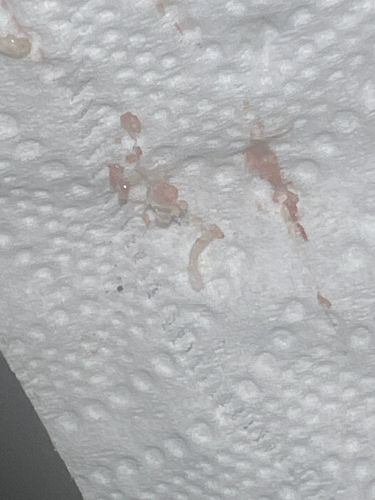
Community identification
Pinworm
Enterobius vermicularis
- Order & Family
- Order: Oxyurida, Family: Oxyuridae
- Size
- 8 mm to 13 mm (females), 2 mm to 5 mm (males)
Natural Habitat
The human large intestine; they are obligate parasites and do not live in the environment outside of a host for long.
Diet & Feeding
Materials found within the human intestinal tract, including epithelial cells and bacteria.
Behavior Patterns
Adult females migrate out of the anus at night to lay thousands of eggs in the perianal area, which causes itching (pruritus ani). Infection occurs via fecal-oral transmission of eggs.
Risks & Benefits
Risk: Causes enterobiasis, a common parasitic infection causing intense itching, disrupted sleep, and irritability. Usually not dangerous but highly contagious. Benefit: None.