
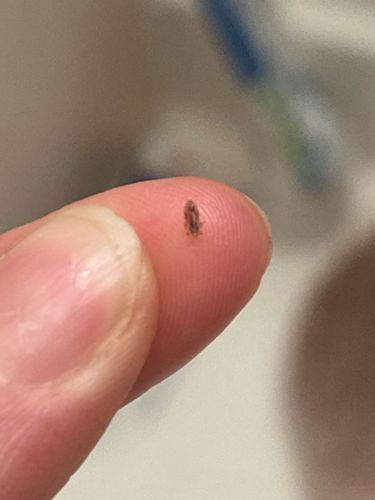
Community identification
Human Lice (specifically the Head Louse or Body Louse)
Pediculus humanus
- Order & Family
- Order: Psocodea (formerly Phthiraptera), Family: Pediculidae
- Size
- 2.0 mm to 4.0 mm (roughly the size of a sesame seed).
Natural Habitat
Exclusively on the human body, specifically the hair/scalp (head louse) or clothing/seams (body louse).
Diet & Feeding
Obligate hematophages; they feed exclusively on human blood several times a day.
Behavior Patterns
They are wingless and cannot jump or fly; they move by crawling. They glue their eggs (nits) to hair shafts or clothing fibers. They die within 24–48 hours if separated from a human host.
Risks & Benefits
Risks: Cause intense itching (pruritus) due to allergic reactions to saliva. Body lice can transmit serious diseases like epidemic typhus. Head lice do not transmit disease but cause social distress and secondary skin infections from scratching.