
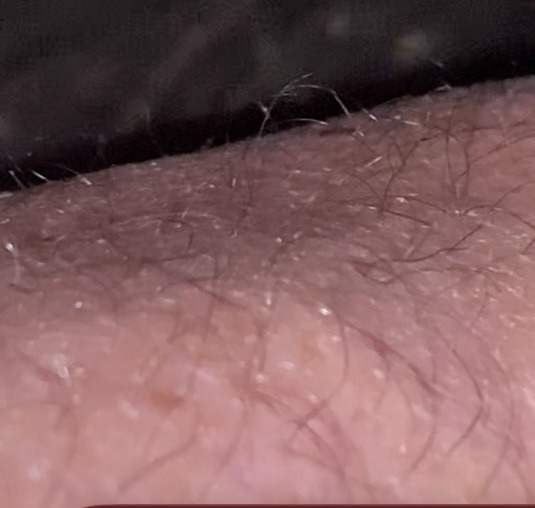
Community identification
Louse egg (Nit)
Pediculus humanus capitis (for head lice)
- Order & Family
- Order: Psocodea, Family: Pediculidae
- Size
- Approximately 0.8 mm in length
Natural Habitat
Attached to human hair shafts, commonly near the scalp, ears, and nape of the neck.
Diet & Feeding
The egg (nit) does not eat; hatched lice feed on human blood using sucking mouthparts.
Behavior Patterns
The female louse glues eggs to individual hairs. Eggs hatch in 7 to 10 days into nymphs, which mature into adults in about another week. They are transmitted through direct contact.
Risks & Benefits
While not a vector for major diseases, they cause intense itching (pruritus), potential secondary skin infections from scratching, and significant social/psychological distress.