
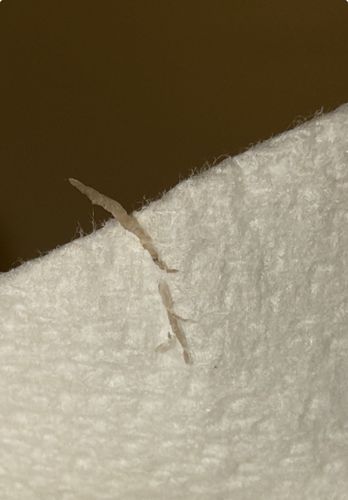
Flea Larva
Ctenocephalides felis (most common) or Ctenocephalides canis
- Order & Family
- Order: Siphonaptera, Family: Pulicidae
- Size
- 2 to 5 millimeters (approx. 1/8 to 1/4 inch) in length
Natural Habitat
Found in dark, protected areas where adult flea feces (flea dirt) and hosts are present, such as carpet fibers, pet bedding, cracks in floorboards, and upholstery.
Diet & Feeding
Scavengers that feed on organic debris, primarily dried blood from the feces of adult fleas (known as 'flea dirt'), dead skin, and other organic matter.
Behavior Patterns
They are negatively phototactic, meaning they actively avoid light by burrowing deep into carpets or bedding. They are legless and move by contracting their muscles like small worms or caterpillars. They spin silken cocoons to pupate before becoming adults.
Risks & Benefits
Risks: As the juvenile stage of fleas, they pose a significant health risk to pets and humans. They develop into biting adults that cause itching, allergic reactions (flea allergy dermatitis), and potential transmission of diseases like tapeworms and typhus. They offer no environmental benefits in domestic settings.