
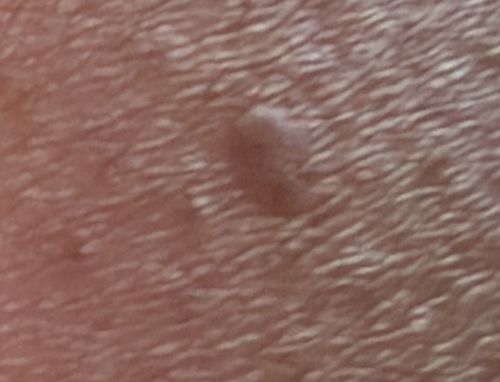
Scabies Mite (Burrow/Rash)
Sarcoptes scabiei var. hominis
- Order & Family
- Order: Sarcoptiformes, Family: Sarcoptidae
- Size
- Microscopic; females are approx. 0.30–0.45 mm long, males are smaller (approx. 0.2 mm). They are generally not visible to the naked eye.
Natural Habitat
The epidermis (outer layer) of human skin, particularly in warm, moist areas like between fingers, wrists, elbows, and armpits.
Diet & Feeding
Epidermal skin cells and interstitial fluid found within the skin layers.
Behavior Patterns
The female mite burrows into the upper layer of the skin to create tunnels where she lays eggs. This causes an intense allergic reaction and itching, often worse at night. The image likely shows the resulting raised bump, burrow track, or inflammatory nodule rather than the mite itself.
Risks & Benefits
Risks: Causes scabies, a highly contagious skin infestation characterized by intense itching and a pimple-like rash. Secondary bacterial infections (like impetigo) can occur from scratching. Benefits: None known to humans or the ecosystem.