
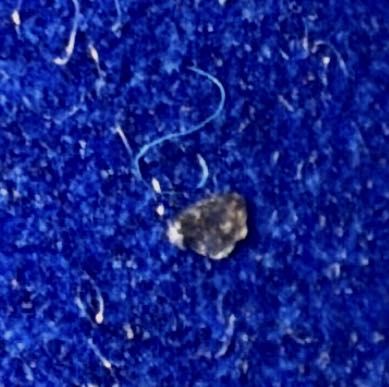
Carpet Beetle (specifically a Case-bearing Clothes Moth larva casing or Carpet Beetle debris)
Tinea pellionella (Case-bearing Clothes Moth) or Anthrenus verbasci (Varied Carpet Beetle)
- Order & Family
- Lepidoptera: Tineidae (Moths) or Coleoptera: Dermestidae (Beetles)
- Size
- Larval case is typically 5-10 mm long.
Natural Habitat
Found indoors, typically in dark, undisturbed areas such as closets, under carpets, in air ducts, or around baseboards where natural fibers accumulate.
Diet & Feeding
Larvae feed on keratin-rich materials, including wool, silk, fur, feathers, hair, lint, and sometimes stored food products.
Behavior Patterns
The larvae of the Case-bearing Clothes Moth carry a silken case around with them, which they camouflaged with fibers from their environment. Carpet beetles hide in cracks and crevices. They avoid light.
Risks & Benefits
Risks: Major textile pests; larvae can cause significant damage to clothing, carpets, upholstery, and taxidermy. They do not bite or sting humans, though some people may have allergic reactions to larval hairs. Benefits: In nature, they act as scavengers/decomposers of animal matter.