
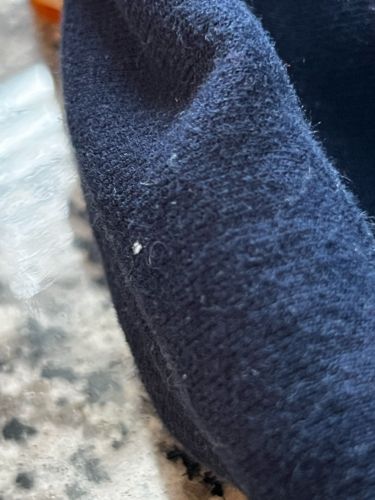
Community identification
Body Louse / Head Louse (Nit)
Pediculus humanus
- Order & Family
- Order: Psocodea (formerly Phthiraptera), Family: Pediculidae
- Size
- Approximately 2 to 4 mm (adults); nits are roughly 0.8 mm long and teardrop-shaped.
Natural Habitat
Found exclusively on humans; head lice live on the scalp and hair, while body lice live in clothing and move to the skin to feed.
Diet & Feeding
Obligate parasites that feed exclusively on human blood several times a day.
Behavior Patterns
They are wingless and cannot jump or fly; they move by crawling. Female lice attach eggs (nits) firmly to hair shafts or clothing fibers with a glue-like substance. Eggs hatch in about 8-9 days.
Risks & Benefits
Risks include intense itching, skin irritation, and secondary bacterial infections from scratching. Body lice specifically can transmit diseases like epidemic typhus and trench fever. There are no ecological benefits to humans.