
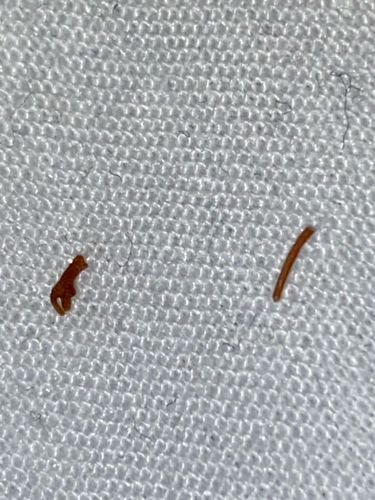
Dog Flea / Cat Flea
Ctenocephalides canis / Ctenocephalides felis
- Order & Family
- Order: Siphonaptera; Family: Pulicidae
- Size
- 1.5 mm to 4.0 mm in length
Natural Habitat
Inhabits the bodies of domestic and wild mammals, and can be found in carpets, bedding, and floor cracks in homes.
Diet & Feeding
Adults are hematophagous (blood-feeders), typically feeding on the blood of cats, dogs, and occasionally humans. Larvae feed on organic debris and 'flea dirt' (dried adult excrement).
Behavior Patterns
They exhibit high jumping ability to reach hosts. They go through a complete metamorphosis (egg, larva, pupa, adult). The specimens in the image appear to be individual flea body parts, likely a leg and a portion of a segment.
Risks & Benefits
Risks include skin irritation, allergic dermatitis, and the potential transmission of parasites like tapeworms (Dipylidium caninum) or bacterial infections. They offer no significant ecosystem benefits in human environments and are considered pests.