
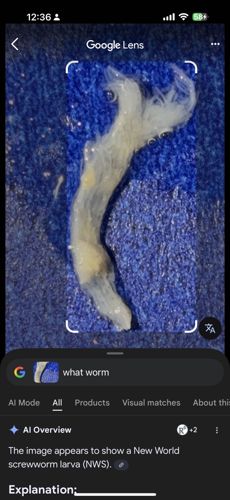
New World Screwworm (Larva)
Cochliomyia hominivorax
- Order & Family
- Diptera (Order), Calliphoridae (Family)
- Size
- Larvae grow from about 1-2 mm to 15-17 mm (approx. 0.6 inches) when mature.
Natural Habitat
Tropical and subtropical areas of the Western Hemisphere; obligate parasites of living warm-blooded animals.
Diet & Feeding
The larvae are parasitic and feed exclusively on the living tissue of warm-blooded animals, unlike most maggots that feed on dead tissue.
Behavior Patterns
Females lay eggs near open wounds on a host. Larvae hatch and burrow deeply into the living flesh, creating distinct pocket-like lesions. Mature larvae drop from the host to pupate in the soil.
Risks & Benefits
Risks: Extremely dangerous parasite to livestock, wildlife, and humans (myiasis); can cause severe tissue destruction, secondary infections, and death if untreated. Benefits: None in their parasitic stage; adults are pollinators but ecologically negligible compared to the severe harm they cause.