Tapeworm Segment (Proglottid)
Scientific Name: Dipylidium caninum (most common species found in pets/homes)
Order & Family: Order: Cyclophyllidea, Family: Dipylidiidae
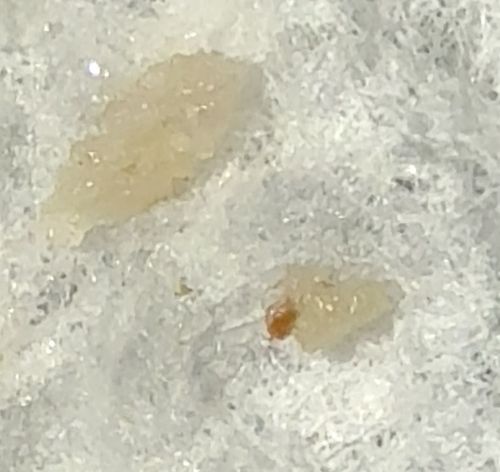
Size: Segments are typically small, resembling grains of rice or cucumber seeds (approximately 2-3 mm wide and 6-12 mm long when fresh; smaller when dried).
Natural Habitat
Intestinal tract of dogs and cats; segments are often found on pet bedding, around the anus of pets, or on furniture where pets sleep.
Diet & Feeding
The adult tapeworm absorbs nutrients directly from the host's intestine. The segments contain egg packets, not a digestive system.
Behavior Patterns
Segments detach from the adult worm in the intestine and pass out with feces or crawl out of the anus. When dried (as appearing in the image), they look like sesame seeds or rice grains. Fleas serve as the intermediate host; larvae develop inside fleas which are then ingested by pets during grooming.
Risks & Benefits
Risks: Indicates an intestinal parasitic infection in a pet (and likely a flea infestation). While generally not life-threatening to the pet, they cause discomfort and anal itching (scooting). Rare but possible risk of transmission to humans (especially children) if an infected flea is accidentally ingested.
Identified on: 2/24/2026