Booklouse (or Psocid)
Scientific Name: Liposcelis spp. (Common genus for household booklice)
Order & Family: Order: Psocodea (formerly Psocoptera); Family: Liposcelididae
Size: Very small, typically 1 to 2 mm (less than 1/16 inch) in length.
Natural Habitat
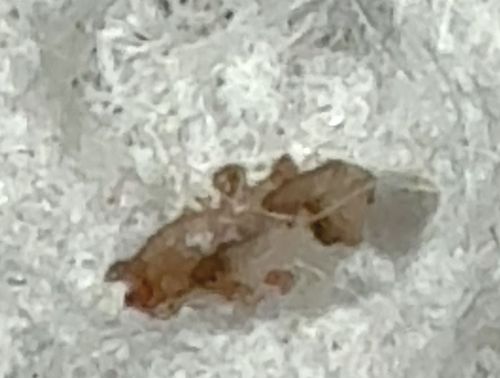
Typically found in areas with high humidity, damp basements, windowsills, new construction (due to drying plaster/lumber), and stored food products. They frequent books, paper, and starchy materials.
Diet & Feeding
They feed on microscopic molds, fungi, starch, glue (book bindings), and decaying organic matter.
Behavior Patterns
Booklice are flightless and move in quick, jerky bursts. They do not bite humans or pets. They thrive in humid environments where mold grows easily. Populations can explode if moisture levels are high.
Risks & Benefits
Risks: They are nuisance pests that can contaminate stored grains or food products and damage old books or wallpaper by eating the starchy glue. They can also cause allergic reactions in sensitive individuals. Benefits: They are harmless scavengers that help decompose organic matter in nature.
Identified on: 2/28/2026