
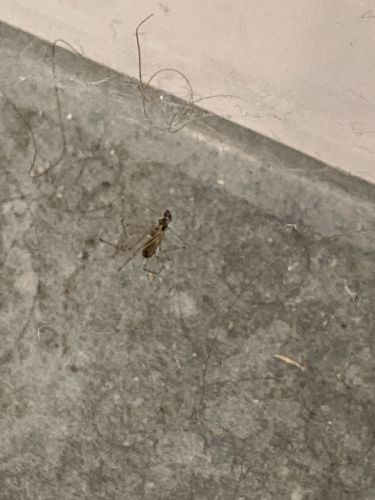
Community identification
Crane Fly
Family Tipulidae
- Order & Family
- Order: Diptera; Family: Tipulidae
- Size
- Varies by species; wingspans typically range from 1 to 6.5 cm (0.4 to 2.5 inches).
Natural Habitat
Found in a variety of environments, most commonly near moist areas, woodlands, and grassy fields. Often enter homes through open windows or doors.
Diet & Feeding
Adults mostly do not eat and have a very short lifespan; some may drink nectar. Larvae (known as 'leatherjackets') feed on decaying organic matter or roots of grasses.
Behavior Patterns
Adults are weak fliers and often rest on walls or windows. They are frequently attracted to lights at night. They undergo complete metamorphosis: egg, larva, pupa, and adult.
Risks & Benefits
Harmless to humans; they do not bite or sting. They are beneficial to the ecosystem as a food source for birds, fish, and bats. Larvae can occasionally be a minor lawn pest if present in very high numbers.