Tunga penetrans (also known as the Chigoe flea, Jigger, or Sand flea)
Scientific Name: Tunga penetrans
Order & Family: Order: Siphonaptera; Family: Tungidae
Size: Approximately 1 mm in length, but the female can swell to the size of a pea (up to 10 mm) while engorged with eggs.
Natural Habitat
Sandy, dry soil, often found in tropical and subtropical regions such as parts of sub-Saharan Africa, Latin America, and the Caribbean.
Diet & Feeding
Blood from mammals, including humans, birds, and livestock.
Behavior Patterns
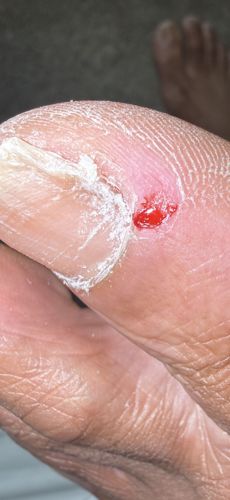
The mated female burrows into the host's skin—frequently on the feet and under toenails—to feed on blood and develop eggs. Once embedded, she remains for about two weeks, laying hundreds of eggs before dying and being sloughed off as the skin heals.
Risks & Benefits
Causes tungiasis, an inflammatory skin disease characterized by pain, itching, and potential secondary bacterial infections such as tetanus or gangrene if untreated. There are no known benefits to humans or the ecosystem.
Identified on: 1/4/2026