Booklouse (or Psocid)
Scientific Name: Liposcelis spp. (Commonly)
Order & Family: Order: Psocodea (formerly Psocoptera), Family: Liposcelididae
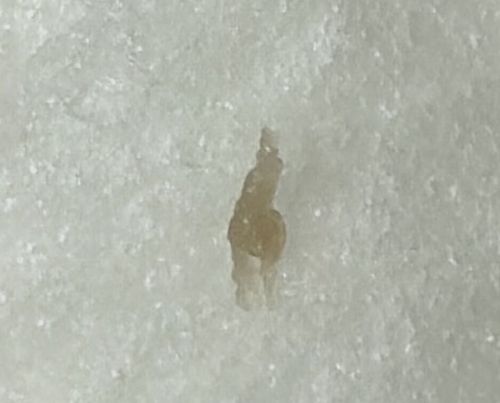
Size: Very small, typically less than 1 mm to 2 mm in length.
Natural Habitat
Found in high-humidity environments indoors, such as bathrooms, basements, or kitchens. They are often discovered in stored food products (like flour or grains), on damp paper, old books, or around window sills.
Diet & Feeding
They feed on microscopic fungi, mold, starch, glues (such as book bindings), and stored starchy foods like grains or cereal.
Behavior Patterns
Booklice are flightless and move in a jerky, scurrying motion. They thrive in humidity which facilitates the mold growth they feed on. They are solitary but can appear in large numbers if conditions are favorable (warm and damp).
Risks & Benefits
Generally harmless to humans and pets as they do not bite or transmit disease. However, they can be a nuisance pest, contaminate food stores, and indicate humidity issues or mold growth in a home.
Identified on: 3/2/2026