
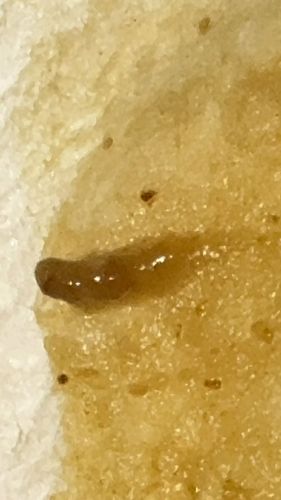
Fruit Fly Larva
Drosophila melanogaster (most common species)
- Order & Family
- Order: Diptera (Flies), Family: Drosophilidae
- Size
- Approximately 2 to 5 millimeters in length, varying by age/instar
Natural Habitat
Found worldwide in association with humans; primarily in decaying organic matter like overripe fruits, vegetables, drains, garbage disposals, and spillages of fermenting liquids (beer, vinegar, juice).
Diet & Feeding
Feeds primarily on microorganisms—specifically yeast and bacteria—that grow on decomposing sugary substances and fermenting fruits or vegetables.
Behavior Patterns
Larvae hatch from eggs and burrow immediately into the food source. They go through three larval stages (instars) over the course of about 4-5 days before finding a dry spot to pupate. They are negatively phototactic (move away from light) to stay buried in their moist food source.
Risks & Benefits
Risks: While they do not bite or sting, they are considered pests because they contaminate stored food and can spread bacteria from unsanitary surfaces (like drains) to food preparation areas. Benefits: Essential model organism in genetics and biological research; help break down rotting organic matter in nature.