
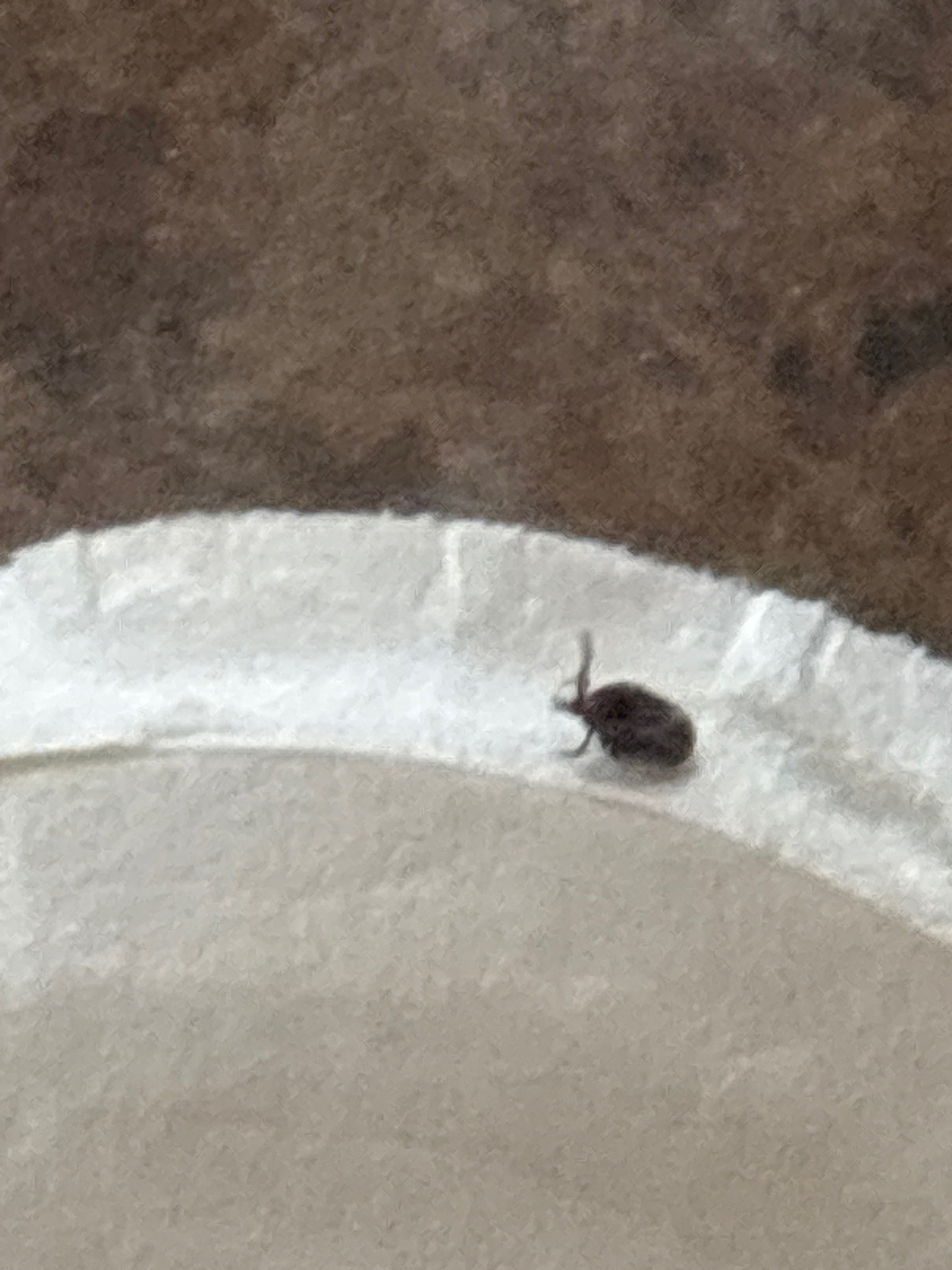
Community identification
Black-legged Tick (Deer Tick)
Ixodes scapularis
- Order & Family
- Ixodida: Ixodidae
- Size
- 1mm (larva) to 5mm (unfed adult female), up to 10mm or more when fully engorged.
Natural Habitat
Wooded and brushy areas with high humidity, often found in leaf litter or on the tips of grasses and shrubs.
Diet & Feeding
Obligate blood-feeders. They feed on a variety of hosts including small mammals (like white-footed mice), birds, deer, and humans.
Behavior Patterns
They undergo a complex life cycle (larva, nymph, adult) requiring a blood meal at each stage. They use 'questing' by climbing vegetation and waving their front legs to latch onto passing hosts.
Risks & Benefits
A major public health risk as they are the primary vector for Lyme disease, anaplasmosis, and babesiosis in North America. They serve as a food source for some birds and reptiles but are generally considered a parasitic pest.