
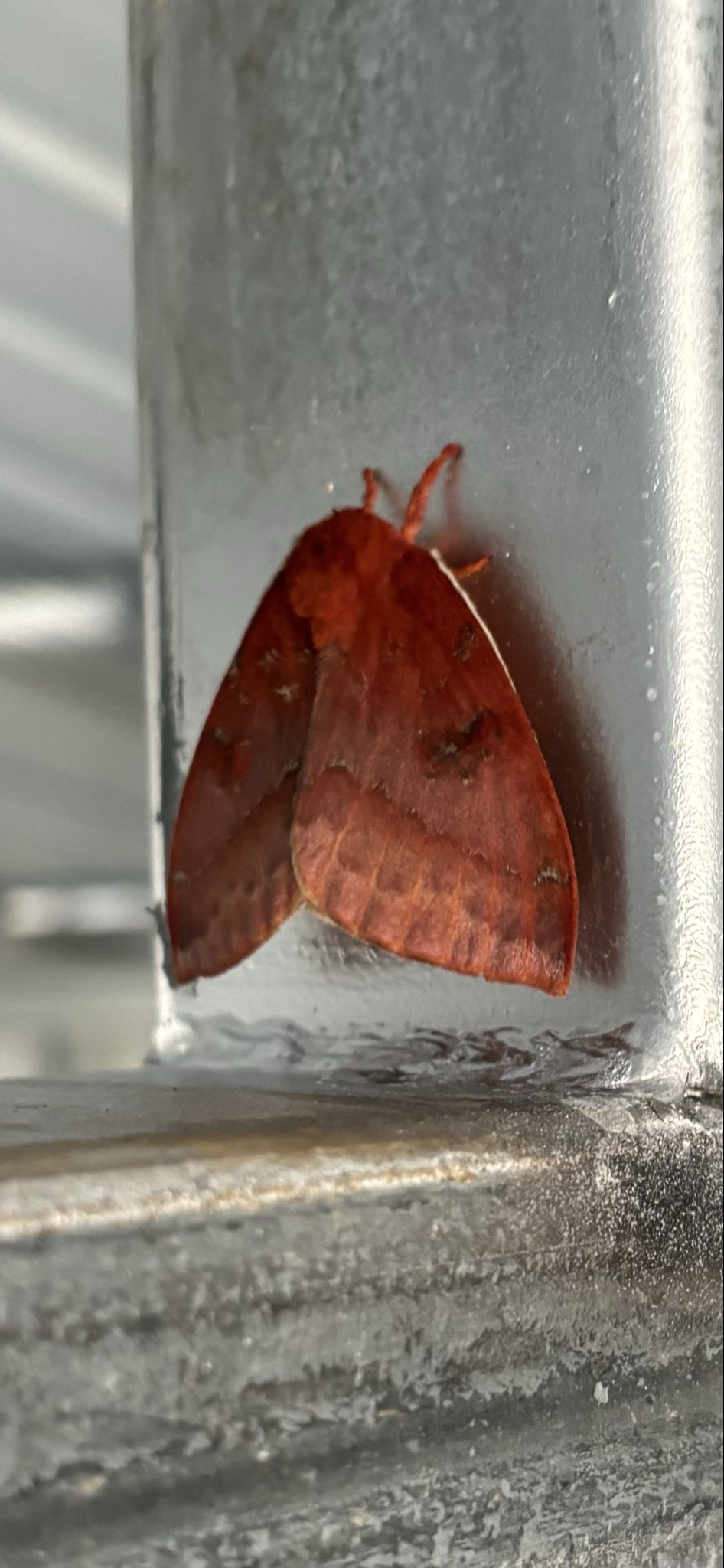
Community identification
Pink-striped Oakworm Moth
Anisota virginiensis
- Order & Family
- Lepidoptera: Saturniidae
- Size
- Wingspan of 4.2 to 6.6 cm (approx. 1.6 to 2.6 inches)
Natural Habitat
Deciduous forests and woodlands, particularly those containing oak trees
Diet & Feeding
Adults do not feed as they have vestigial mouthparts; larvae (caterpillars) feed on foliage of oak, maple, and birch trees
Behavior Patterns
Night-flying moths that are frequently attracted to artificial lights; they undergo a single generation per year in the north and two in the south
Risks & Benefits
Generally harmless to humans; larvae can cause localized defoliation of trees but rarely kill them, and they serve as a food source for birds and small mammals