
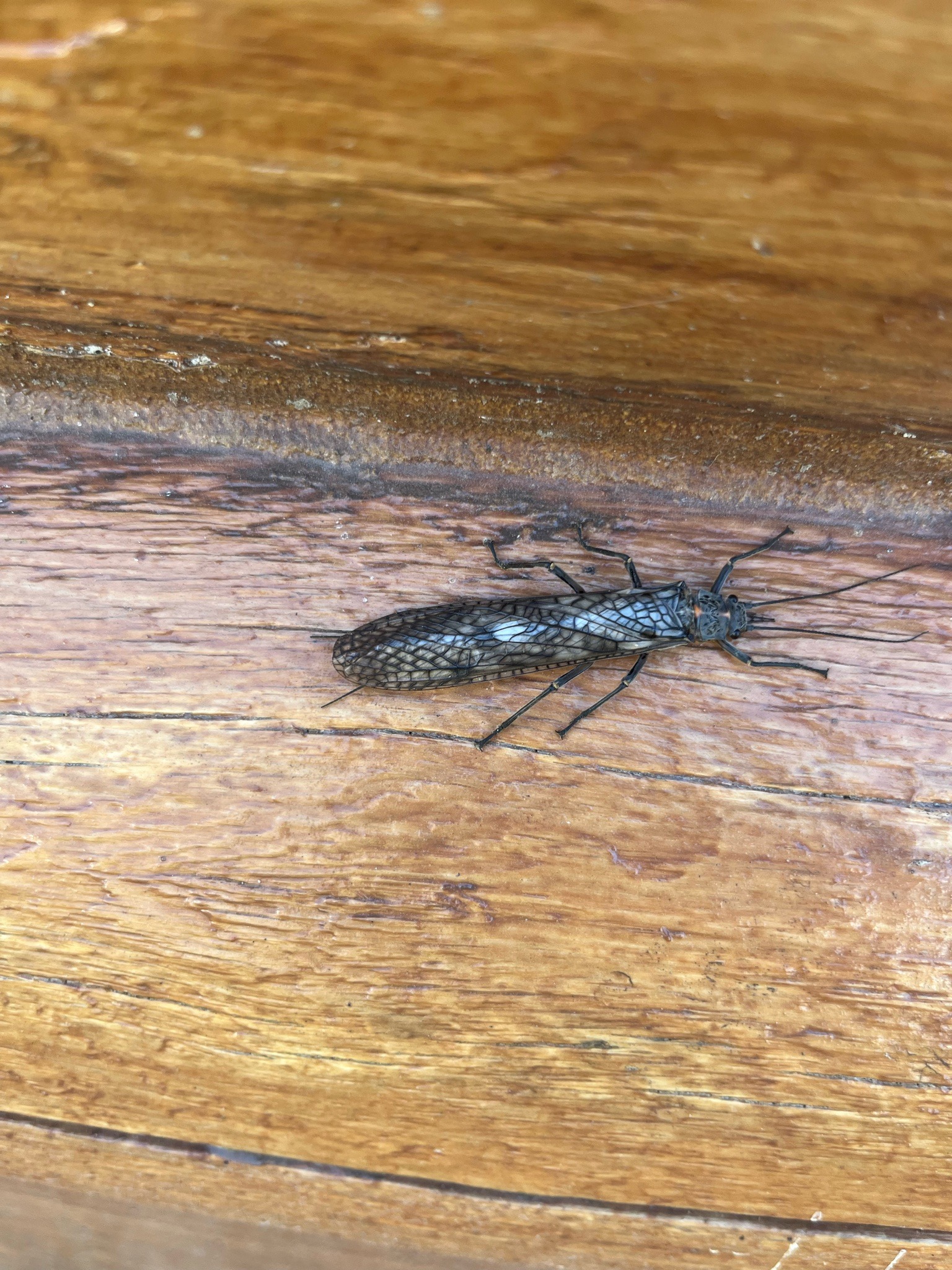
Stonefly
Pteronarcys californica (likely Giant Stonefly)
- Order & Family
- Order Plecoptera; Family Pteronarcyidae
- Size
- 1 to 2 inches (25 to 50 mm) in length, though some species can be larger.
Natural Habitat
Near clean, oxygen-rich running water such as rivers and streams; commonly found on nearby rocks, logs, or vegetation.
Diet & Feeding
Nymphs are typically herbivores or detritivores, feeding on decaying leaf matter or algae. Adults often do not feed at all or may consume soft plant matter and lichen.
Behavior Patterns
Stoneflies have an aquatic larval stage that can last several years. They are poor fliers and are usually seen crawling near water edges. They are highly sensitive to water pollution and serve as environmental indicators.
Risks & Benefits
They are harmless to humans and do not bite or sting. They are highly beneficial to ecosystems as a vital food source for trout and other fish, and their presence indicates excellent water quality.