
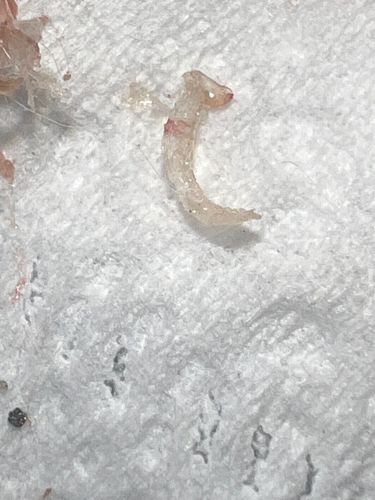
Community identification
Flea larva
Ctenocephalides felis (most likely)
- Order & Family
- Order: Siphonaptera; Family: Pulicidae
- Size
- Approximately 1–5 mm in length depending on the instar stage.
Natural Habitat
Typically found in carpets, upholstery, pet bedding, and floor cracks in environments where a host (dog or cat) is present.
Diet & Feeding
Larvae feed on organic debris and 'flea dirt' (dried adult flea excrement consisting of semi-digested blood).
Behavior Patterns
Larvae are photophobic (move away from light) and require high humidity; they go through three larval stages before spinning a cocoon to pupate.
Risks & Benefits
Risks include the development of adult flea infestations involving painful bites to humans and pets; they can also be intermediate hosts for tapeworms (Dipylidium caninum). They provide no ecological benefits in a domestic setting.