Human Itch Mite (Scabies Mite)
Scientific Name: Sarcoptes scabiei var. hominis
Order & Family: Order: Sarcoptiformes, Family: Sarcoptidae
Size: Microscopic; adult females are roughly 0.30–0.45 mm long and 0.25–0.35 mm wide. Males are slightly smaller.
Natural Habitat
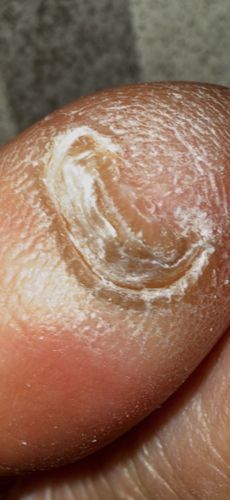
The specific habitat is human skin. The female mites burrow into the upper layer of the skin (stratum corneum) to live and deposit eggs.
Diet & Feeding
Feeds on dissolved human tissues but does not feed on blood.
Behavior Patterns
The female mite burrows just beneath the surface of the skin, creating a tunnel (like the one visible in the image) where she lays eggs. The larvae hatch, travel to the skin surface, and molt into nymphs before maturing into adults. The lifecycle repeats every 10-17 days.
Risks & Benefits
Risks: Causes scabies, an intensely itchy skin infestation. The itching is an allergic reaction to the mites, their waste, and eggs. It is highly contagious through direct skin-to-skin contact. Excessive scratching can lead to secondary bacterial infections like impetigo. There are no known ecosystem benefits as they are obligate parasites.
Identified on: 2/9/2026