
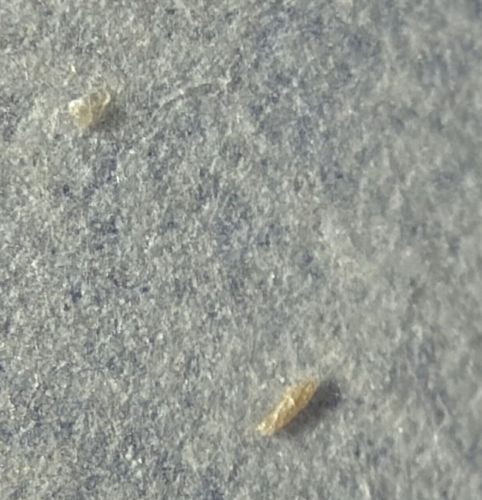
Community identification
Flea Egg
Ctenocephalides felis (most common)
- Order & Family
- Order: Siphonaptera, Family: Pulicidae
- Size
- Approximately 0.5 mm in length
Natural Habitat
Found in environments where host animals (usually dogs or cats) spend time, such as pet bedding, carpets, floor cracks, and furniture upholstery.
Diet & Feeding
Does not feed; it is the embryonic stage of the flea life cycle.
Behavior Patterns
Eggs are laid on the host animal but are non-sticky, so they quickly fall off into the surrounding environment as the host moves. They typically hatch into larvae within 1 to 10 days depending on temperature and humidity.
Risks & Benefits
Risks: Represents the beginning of a flea infestation. While the eggs themselves are harmless, they hatch into larvae and eventually blood-feeding adults that cause itching, allergic reactions, and can transmit diseases (like potential tapeworms) to pets and humans. Benefits: None.