
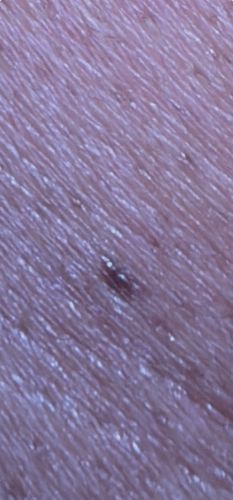
Community identification
Scabies Mite
Sarcoptes scabiei var. hominis
- Order & Family
- Order: Sarcoptiformes / Family: Sarcoptidae
- Size
- Microscopic; females are 0.30–0.45 mm long, males are significantly smaller (0.20–0.30 mm). They are generally not visible to the naked eye as distinct bugs, often appearing only as tiny dots or at the end of a burrow line.
Natural Habitat
The epidermis (upper layer) of human skin; they cannot survive away from the human host for more than 2-3 days.
Diet & Feeding
Feeds on dissolved human tissue and lymph fluid within the stratum corneum (outer skin layer), but does not suck blood.
Behavior Patterns
The female mite burrows into the top layer of the skin to create tunnels where she lays eggs (2-3 per day) and leaves waste. This burrowing activity causes intense itching, especially at night. The life cycle from egg to adult takes about 10-14 days.
Risks & Benefits
Risks: Causes Scabies, a highly contagious skin infestation characterized by intense itching and a pimple-like rash. Scratching can lead to secondary bacterial infections like impetigo or Staphylococcus aureus. Benefits: None known.