
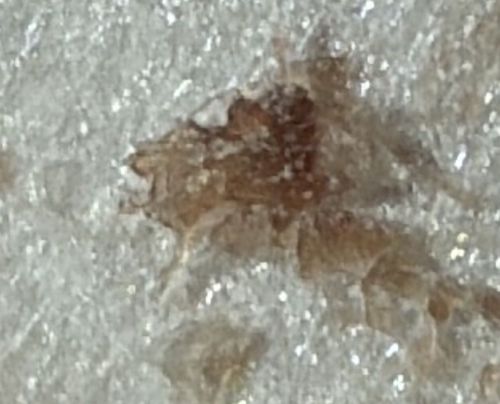
Pubic Louse (Crab Louse)
Pthirus pubis
- Order & Family
- Order: Phthiraptera, Family: Pthiridae
- Size
- Typically 1.1–1.8 mm in length (slightly smaller than body lice or head lice).
Natural Habitat
Exclusively inhabits coarse human hair, most commonly in the pubic region, but can occasionally be found in eyelashes, eyebrows, beard hair, chest hair, and armpit hair.
Diet & Feeding
Hematophagous (blood-feeders); they feed exclusively on human blood, usually taking meals 4-5 times a day.
Behavior Patterns
They are relatively immobile compared to other lice, clutching hair shafts tightly with specialized large claws that resemble crab pincers. They do not jump or fly; spread occurs primarily through intimate physical contact or sometimes via shared bedding/towels.
Risks & Benefits
Risks: They cause intense itching (pruritus) due to an allergic reaction to their saliva. Scratching can lead to secondary bacterial skin infections. They are generally considered a nuisance parasite rather than a vector for serious diseases, unlike body lice.