
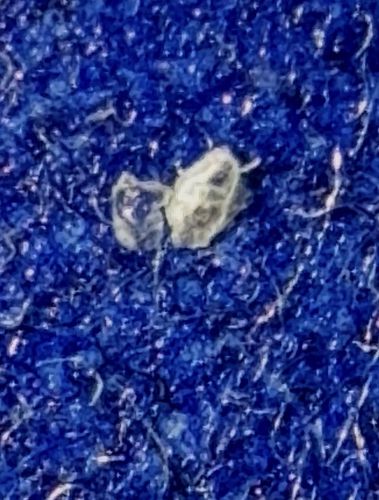
Lace Bug Nymph
Family Tingidae (immature stage)
- Order & Family
- Order: Hemiptera, Family: Tingidae
- Size
- Nymphs are very small, typically ranging from 1 mm to 2 mm in length.
Natural Habitat
Found almost exclusively on the undersides of leaves of specific host plants (various trees and shrubs like azaleas, sycamores, and oaks). They are rarely found indoors unless carried in on clothing or plant material.
Diet & Feeding
Herbivorous sap-suckers. They pierce the cells of leaves to suck out the chlorophyll and cell contents, leaving behind characteristic stippling or bleaching damage on the leaf surface.
Behavior Patterns
Lace bugs are relatively sedentary, feeding in groups on the underside of leaves. The nymphs (immature stages) often have spines or tubercles and lack the intricate 'lace' wings of the adults. They leave distinctive dark, varnish-like excrement spots on leaf undersides. They molt several times before reaching adulthood.
Risks & Benefits
Risks: They are significant plant pests that cause aesthetic damage (yellowing, browning, or premature leaf drop) to ornamental plants. They can occasionally bite humans if they fall onto skin, causing a mild stinging sensation or dermatitis, though they do not feed on blood or transmit diseases. Benefits: None significant to humans; they are generally considered pests.