Springtail
Scientific Name: Collembola (subclass)
Order & Family: Order: Entomobryomorpha (common for elongated springtails), Family: Entomobryidae (likely)
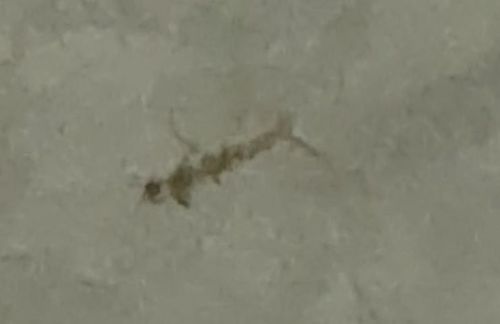
Size: Typically very small, ranging from 1 mm to 6 mm (1/16 to 1/8 inch) in length.
Natural Habitat
They thrive in moist environments. Outdoors, they are found in soil, leaf litter, and decaying wood. Indoors, they often appear in bathrooms, kitchens, basements, or near potted plants where humidity is high.
Diet & Feeding
They feed on decaying organic matter, bacteria, fungi, mold, algae, and microscopic plant material.
Behavior Patterns
Springtails are famous for their furcula, a tail-like appendage folded under their abdomen that allows them to 'spring' or jump into the air when threatened. They do not have wings. They often gather in large numbers in damp areas.
Risks & Benefits
Risks: They are nuisance pests inside homes but do not bite, sting, or transmit diseases to humans or pets. They do not damage structural wood. Benefits: They are vital decomposers in the ecosystem, helping to break down organic matter and recycle nutrients in the soil.
Identified on: 3/9/2026