
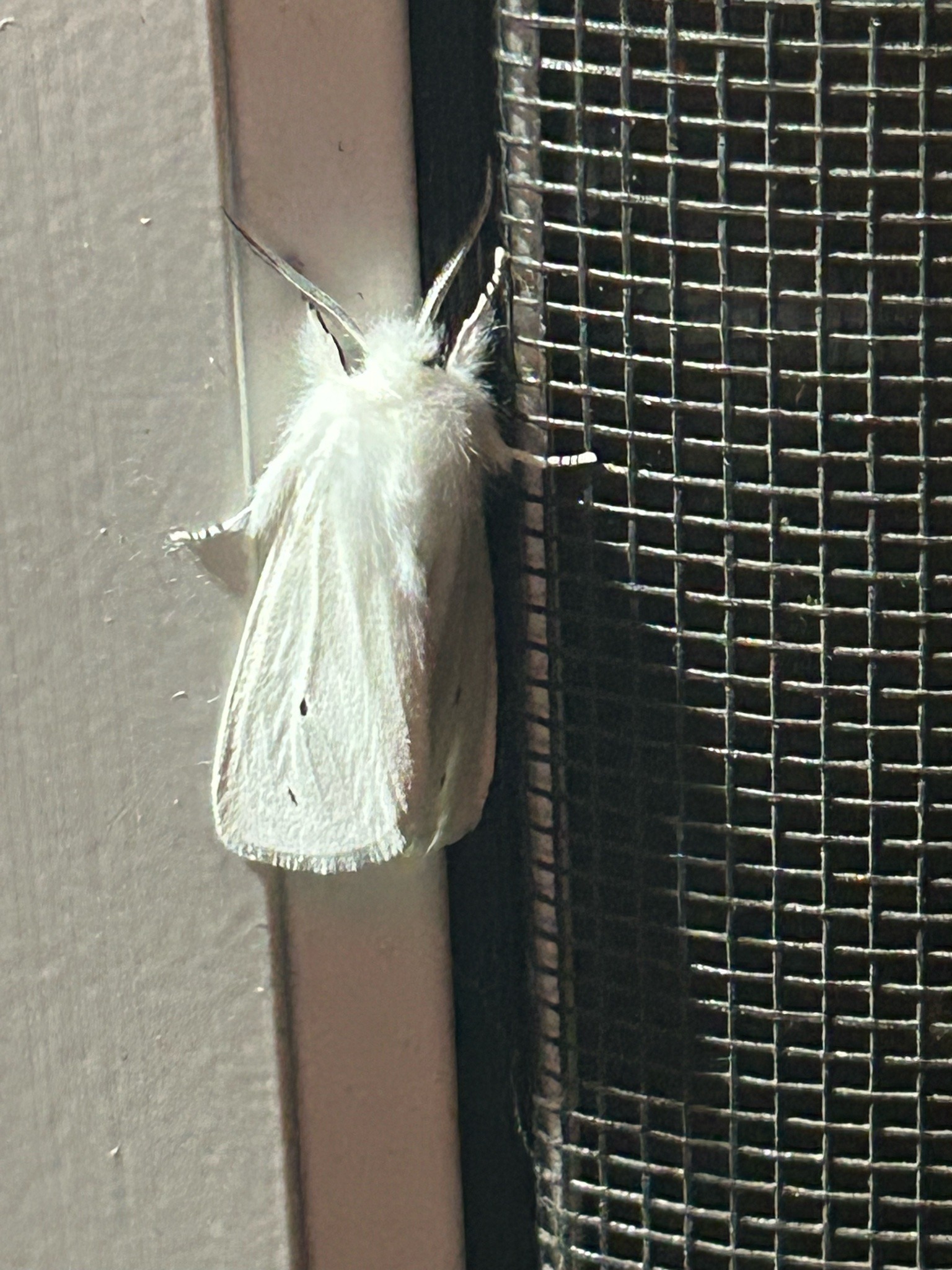
Community identification
White Ermine Moth / Fall Webworm Moth
Hyphantria cunea
- Order & Family
- Lepidoptera: Erebidae
- Size
- Wingspan of 25 to 35 mm (roughly 1 to 1.4 inches).
Natural Habitat
Found in forests, woodlands, urban gardens, and agricultural lands across North America and parts of Europe/Asia.
Diet & Feeding
Adults do not eat; larvae (caterpillars) are generalist feeders on the leaves of over 600 species of trees and shrubs, including walnut, cherry, and crabapple.
Behavior Patterns
Nocturnal and attracted to light. Females lay egg masses on the undersides of leaves; larvae build large silken tents (webs) at the tips of branches to feed safely from predators.
Risks & Benefits
Larvae cause aesthetic damage to trees through defoliation and web building, but rarely kill healthy trees. They serve as a vital food source for birds, and adults act as minor pollinators.