Tunga Penetrans (Jigger, Chigoe Flea, or Sand Flea)
Scientific Name: Tunga penetrans
Order & Family: Order: Siphonaptera, Family: Tungidae
Size: Approximately 1 mm (free-living/unfed); upon burrowing into skin and engorging, the female can expand to the size of a small pea (about 1 cm).
Natural Habitat
Found in tropical and sub-tropical climates, particularly in sandy soil, beaches, and stables. They are endemic to parts of Latin America, the Caribbean, and sub-Saharan Africa.
Diet & Feeding
Hematophagous (feeds on the blood of mammals). Both males and females feed on blood, but only the female burrows into the skin.
Behavior Patterns
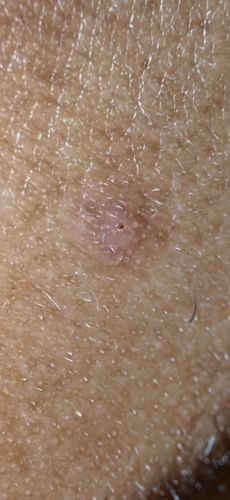
The fertilized female flea burrows head-first into the skin of a host (often feet, toes, or heels). It stays embedded, feeding on blood and producing eggs, causing a condition known as Tungiasis. The 'dark spot' visible in the center of the lesion is often the flea's posterior segments, used for breathing and expelling eggs.
Risks & Benefits
Risks: Causes Tungiasis, a parasitic skin disease characterized by intense itching, pain, and inflammation. Secondary bacterial infections (like staph or strep) can occur, potentially leading to gangrene, tetanus, or toe loss if untreated. Benefits: None known to humans or general ecosystems; considered a parasitic pest.
Identified on: 2/8/2026