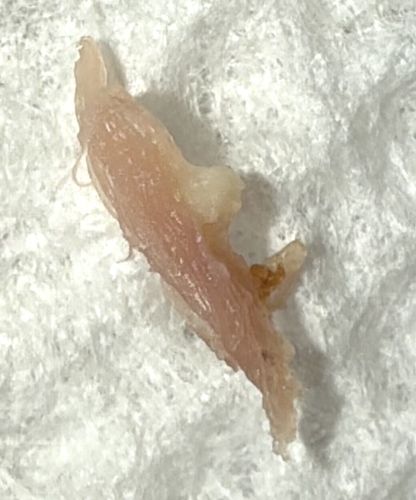
Parasitic Tapeworm Segment (Specifically looks like Dipylidium caninum)
Scientific Name: Dipylidium caninum (proglottid)
Order & Family: Order: Cyclophyllidea / Family: Dipylidiidae
Size: Individual segments (proglottids) are typically 3-12 mm long, often described as resembling cucumber seeds or grains of rice.
Natural Habitat
The specific habitat for this life stage is the digestive tract of domestic dogs and cats; externally, they are often found on the animal's fur around the anus, in feces, or on bedding.
Diet & Feeding
As adults, they absorb nutrients directly from the host's intestine. The larvae (cysticercoids) develop inside fleas or lice.
Behavior Patterns
The tapeworm sheds these mobile segments (proglottids) which exit the host via the anus. These segments are capable of crawling and contracting, which helps them disperse egg packets into the environment to be eaten by flea larvae.
Risks & Benefits
Risk: They are parasites that require medical treatment (deworming) for pets. While usually causing mild symptoms like anal itching or weight loss in pets, they can theoretically infect humans (specifically children who accidentally ingest an infected flea), though this is rare. They offer no environmental benefits.
Identified on: 2/28/2026