
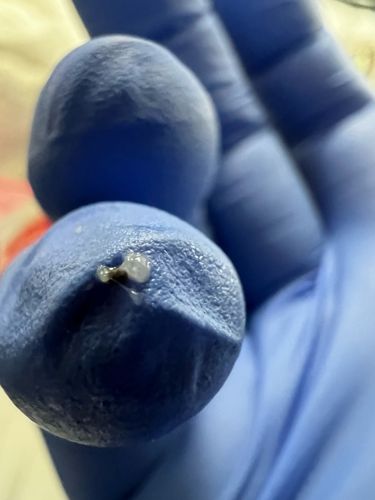
Community identification
Human Head Louse Egg (Nit)
Pediculus humanus capitis
- Order & Family
- Order: Psocodea (formerly Phthiraptera), Family: Pediculidae
- Size
- Nits (eggs) are approximately 0.8 mm by 0.3 mm; adults are 2.1–3.3 mm.
Natural Habitat
Exclusively on the human scalp, specifically attached to hair shafts near the base of the neck and around the ears.
Diet & Feeding
Obligate ectoparasites that feed exclusively on human blood several times a day.
Behavior Patterns
Nits are glued firmly to the hair shaft by the female. They cannot jump or fly and are transmitted through direct head-to-head contact. The life cycle from egg to adult takes about 30 days.
Risks & Benefits
They do not transmit disease but cause intense itching (pruritus) due to an allergic reaction to their saliva. Infestations can lead to secondary skin infections from scratching. They provide no known ecosystem benefits.