Anchor Worm
Scientific Name: Lernaea cyprinacea
Order & Family: Order Cyclopoida, Family Lernaeidae
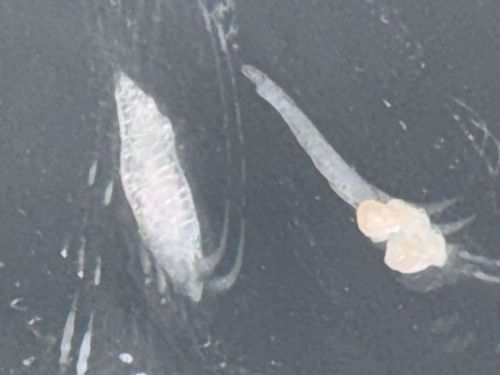
Size: Female adults range from 5mm to 22mm in length; males and larvae are microscopic
Natural Habitat
Freshwater environments such as ponds, lakes, and rivers where fish hosts are present
Diet & Feeding
Parasitic; the adult female embeds its head into fish tissue to feed on blood and bodily fluids
Behavior Patterns
Has a multi-stage life cycle; males die after mating, while females burrow into a host, develop a large anchor-like head, and produce twin egg sacs
Risks & Benefits
Highly detrimental to fish health, causing inflammation, secondary infections, and potential death; no direct risk to humans but is a major pest in aquaculture
Identified on: 1/3/2026