
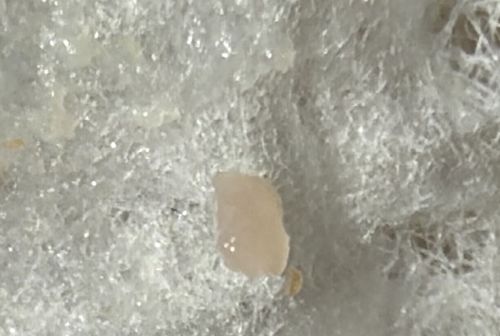
Webbing Clothes Moth Larva (or Casemaking Clothes Moth Larva)
Tineola bisselliella (or Tinea pellionella)
- Order & Family
- Order: Lepidoptera, Family: Tineidae
- Size
- Typically roughly 10-12 mm (about 1/2 inch) long when fully grown.
Natural Habitat
Dark, undisturbed areas in homes, such as closets, drawers, and attics. They are commonly found on wool clothing, carpets, upholstered furniture, and within accumulations of lint or pet hair.
Diet & Feeding
Strictly keratophagous, meaning they feed on keratin-based animal fibers. This includes wool, fur, silk, leather, feathers, and occasionally pet hair or lint.
Behavior Patterns
Larvae prefer dark, quiet spaces and avoid light. They spin silken tunnels or tubes (Webbing Clothes Moth) or carry a portable case (Casemaking Clothes Moth) as they feed. They are responsible for the actual damage to fabrics; the adult moths do not feed.
Risks & Benefits
Risks: Significant pest of natural fibers; can cause costly damage to clothing, rugs, and furniture. They do not bite or sting humans and carry no known diseases. Benefits: In nature (not homes), they play a role in breaking down animal hair and feathers, recycling keratin.