
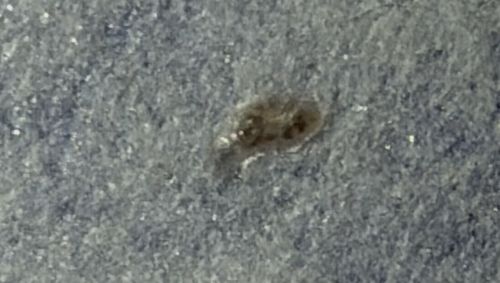
Community identification
Plaster Bagworm (also known as Household Casebearer)
Phereoeca uterella
- Order & Family
- Lepidoptera order, Tineidae family (Clothes Moths)
- Size
- Larval case is typically about 8–13 mm (0.3–0.5 inches) long.
Natural Habitat
Typically found indoors in warm, humid climates; they often frequent walls, closets, and underneath furniture where spider webs or dust collect.
Diet & Feeding
They feed on old spider webs, book bindings, wool, hair, and miscellaneous dried organic debris.
Behavior Patterns
The larva builds a flattened, watermelon-seed-shaped case made of silk and debris (sand, dust, lint) which it carries around for protection. It extends its head from either end of the case to move and feed.
Risks & Benefits
They do not bite or sting humans. However, like other clothes moths, they can be minor household pests, potentially damaging woolen fabrics or rugs if an infestation is large.