
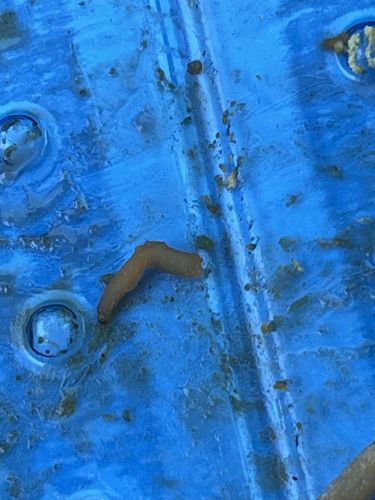
Community identification
Rat-tailed maggot
Eristalis tenax (larva)
- Order & Family
- Order: Diptera, Family: Syrphidae
- Size
- 20 mm to 35 mm (excluding the 'tail' which can exceed 100 mm when extended)
Natural Habitat
Stagnant, oxygen-poor water rich in organic matter, such as manure pits, sewage lagoons, and drainage ditches.
Diet & Feeding
They represent a saprophagous stage, feeding on decaying organic matter and bacteria found in highly polluted water.
Behavior Patterns
The long posterior respiratory siphon (the 'tail') acts as a snorkel, allowing the larva to breathe atmospheric air while submerged in oxygen-depleted water. They eventually migrate to drier areas to pupate.
Risks & Benefits
Benefits: Adults (drone flies) are significant pollinators. Risks: If accidentally ingested through contaminated water, they can cause accidental enteric myiasis in humans, though this is rare.