Tetranychus urticae
Scientific Name: Two-spotted spider mite
Order & Family: Trombidiformes, Tetranychidae
Size: 0.3 to 0.5 mm in length
Natural Habitat
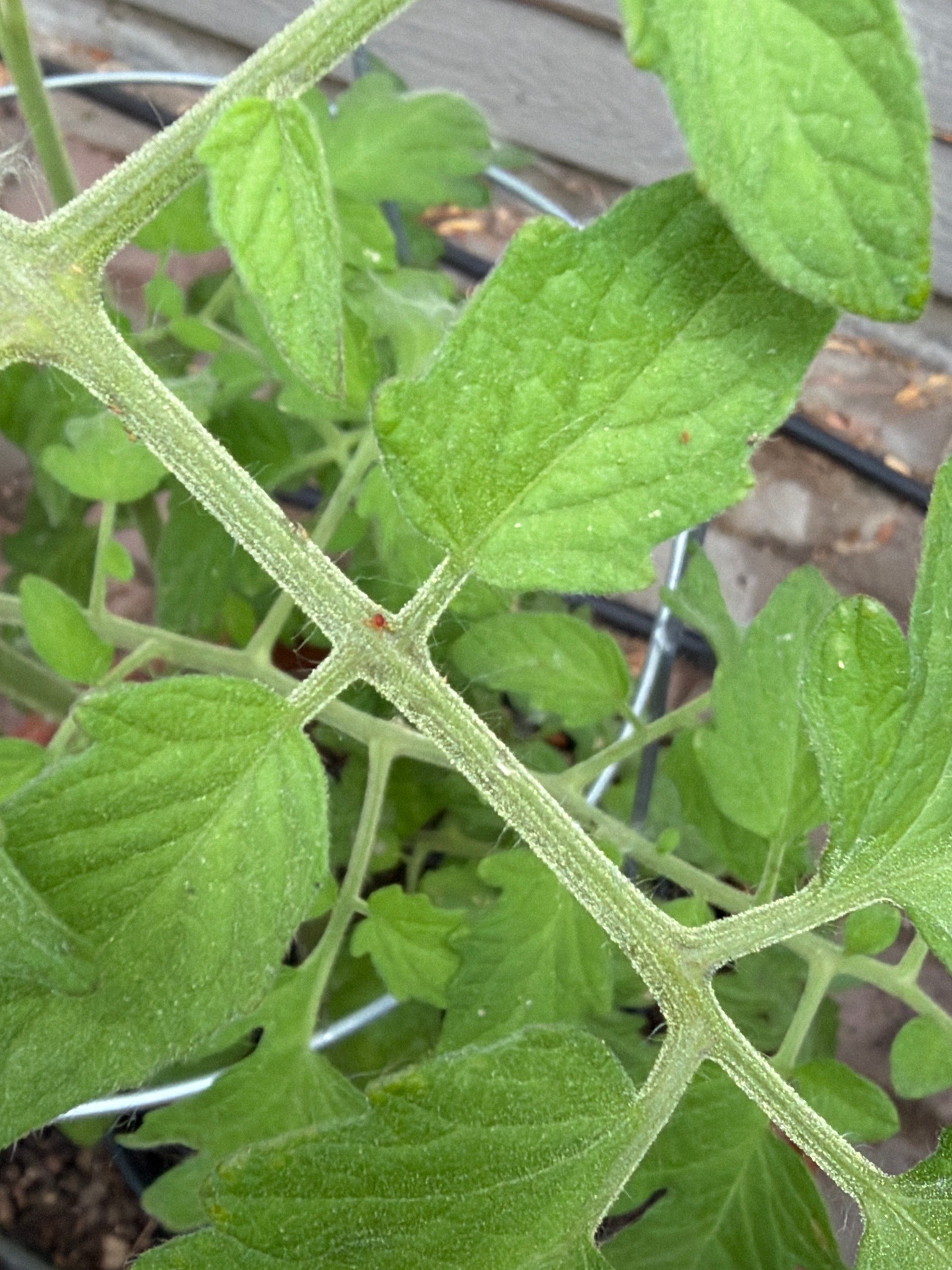
Gardens, agricultural fields, and greenhouses, particularly on the undersides of leaves in warm, dry environments.
Diet & Feeding
Plant cell contents; they use needle-like mouthparts to pierce individual plant cells and suck out the liquid, particularly on tomato leaves and other vegetable crops.
Behavior Patterns
They produce fine silk webbing to protect the colony from predators and environmental factors. They reproduce rapidly in hot weather, with a life cycle from egg to adult taking as little as 5 days.
Risks & Benefits
Significant agricultural pest that causes leaf yellowing (stippling), leaf drop, and reduced crop yield. They provide no benefit to the ecosystem and are known for developing resistance to many chemical pesticides.
Identified on: 6/24/2026