
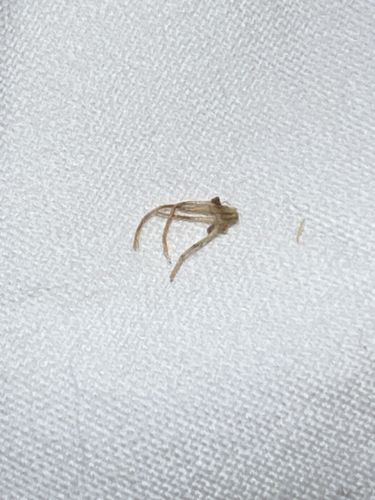
Community identification
Spider exoskeleton (molt)
Araneae (order)
- Order & Family
- Order: Araneae; Family: Multiple possible (appears to be a typical hunting spider like a Running Spider, family Philodromidae)
- Size
- Variable; this specific specimen appears to be approximately 5-10mm.
Natural Habitat
Standard residential and outdoor environments; found on walls, ceilings, and inside crevices where spiders may hide to safely shed their skin.
Diet & Feeding
Not applicable to the molt itself; however, the living spider is carnivorous, eating insects and other small arthropods.
Behavior Patterns
Spiders undergo ecdysis (molting) to grow. They typically seek a secluded, safe spot and hang upside down. The exoskeleton splits at the cephalothorax, and the spider pulls itself out, leaving behind this hollow casing.
Risks & Benefits
No risk; it is a harmless piece of discarded biological material. In the ecosystem, spiders are beneficial as they control pest populations like flies and mosquitoes.