
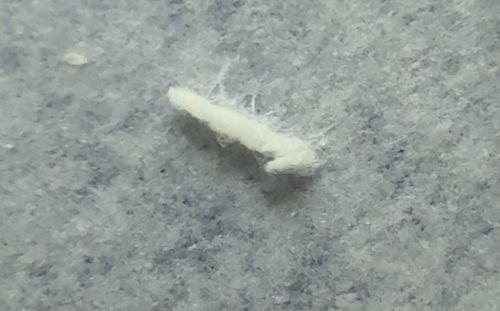
Mealybug
Pseudococcidae (Family)
- Order & Family
- Order: Hemiptera, Family: Pseudococcidae
- Size
- Typically 1 to 4 millimeters in length, though some species can be larger.
Natural Habitat
Found worldwide in warm, moist climates; commonly located on house plants, fruit trees, and ornamental plants, usually clustering in leaf axils, on stems, or under leaves.
Diet & Feeding
Herbivorous sap-suckers; they feed on plant juices (phloem) by inserting their stylets into plant tissue, often targeting new growth.
Behavior Patterns
Mealybugs are known for secreting a powdery white wax that covers their bodies for protection. They are relatively immobile once they find a feeding spot, often forming colonies. They excrete honeydew, which can attract ants and promote the growth of sooty mold.
Risks & Benefits
Risk: They are significant agricultural and horticultural pests, weakening plants, causing yellowing leaves, and potentially transmitting plant viruses. Benefit: Some specific species are used in biological control, though generally, they are considered pests.