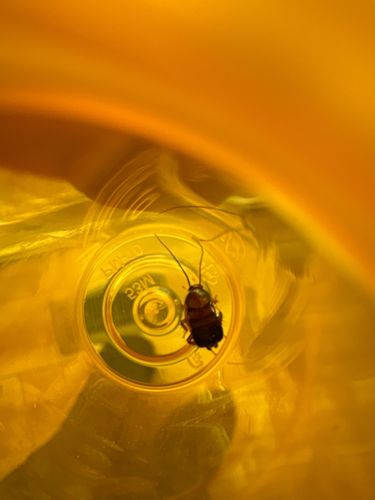
Australian Cockroach (Nymph)
Scientific Name: Periplaneta australasiae
Order & Family: Order Blattodea, Family Blattidae
Size: Nymphs vary in size from 5mm to 25mm; adults reach 32-35mm (about 1.25 inches).
Natural Habitat
Found in warm, moist subtropical or tropical environments. Commonly inhabits leaf mulch, bark, and perimeter voids, but will enter homes seeking moisture and warmth.
Diet & Feeding
Omnivorous scavengers that feed on decaying organic matter, starchy materials, paper, plants, and household food scraps.
Behavior Patterns
Primarily nocturnal insects that move quickly when disturbed. Nymphs, like the one pictured, are flightless and are distinguished by the pale yellow markings on their thorax and abdomen.
Risks & Benefits
Considered a domestic pest. They can spread bacteria (like Salmonella) and allergens. In the wild, they benefit the ecosystem by breaking down organic matter and serving as prey for larger animals.
Identified on: 2/22/2026