
Community identification
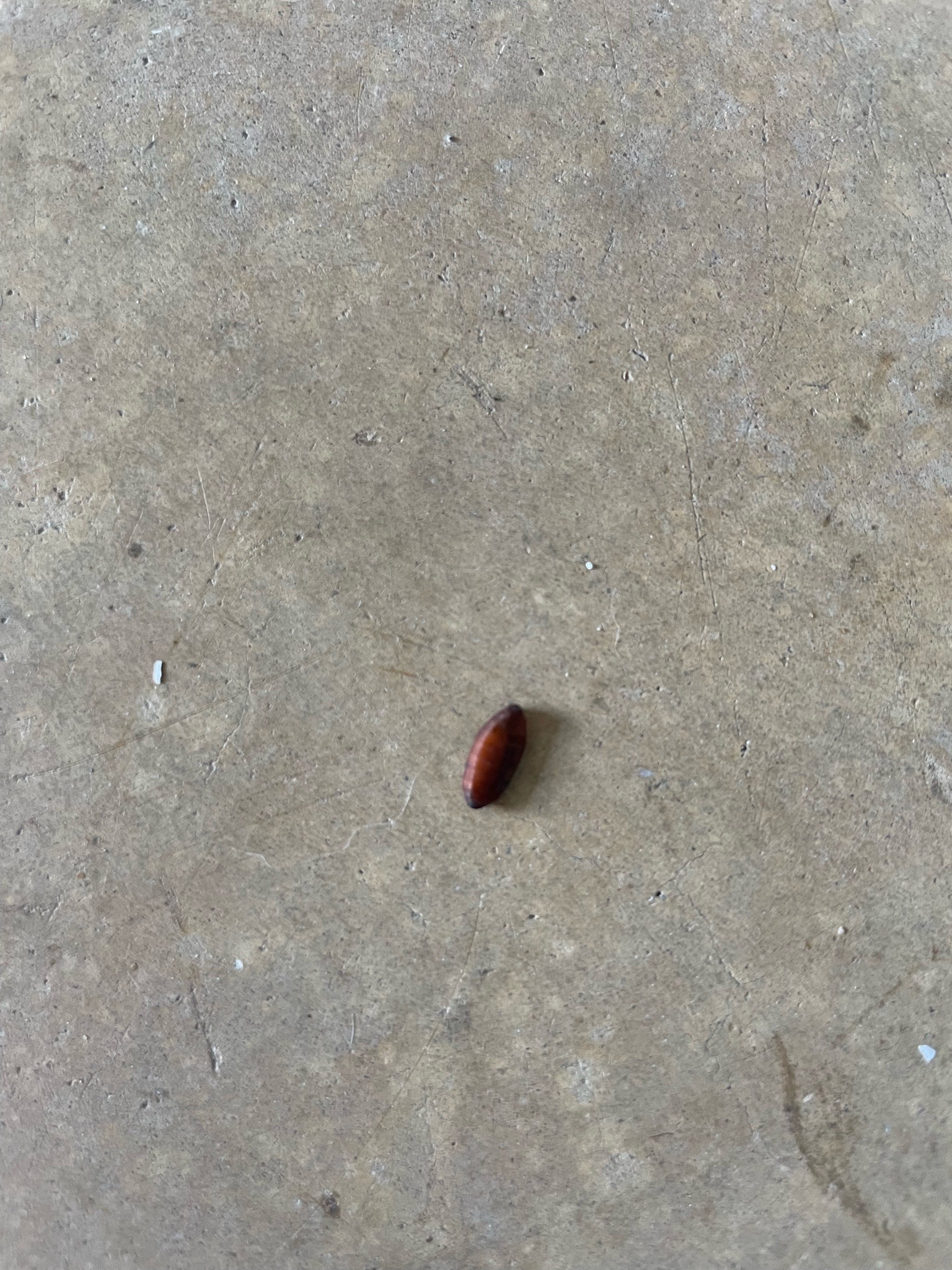
House Fly Puparium
Musca domestica
- Order & Family
- Order: Diptera; Family: Muscidae
- Size
- Approximately 6-8 mm in length
Natural Habitat
Found globally near human activity, particularly in areas with decaying organic matter, trash, or animal waste.
Diet & Feeding
In this pupal stage, the insect does not eat. Larvae eat decaying organic matter, while adults eat liquid or semi-liquid substances.
Behavior Patterns
This is the non-feeding, immobile transformation stage between the larva (maggot) and the adult fly. It lasts roughly 4 to 6 days depending on temperature.
Risks & Benefits
While puparia are harmless, the resulting house flies are major vectors for diseases like salmonella and E. coli. They aid in the ecosystem by breaking down organic waste.