
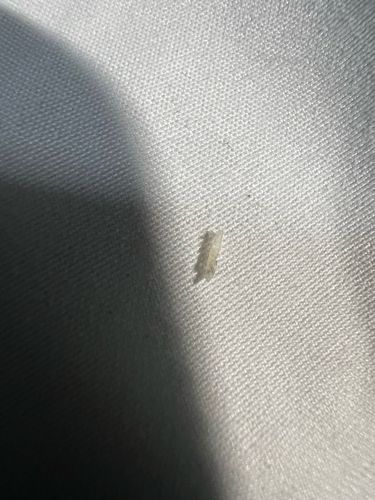
Community identification
Body Louse Egg (Nit)
Pediculus humanus humanus
- Order & Family
- Order: Psocodea; Family: Pediculidae
- Size
- Approximately 0.5 to 1.0 mm (eggs/nits)
Natural Habitat
Found on the fibers of clothing, bedding, and linens, particularly near seams or areas in close contact with the body.
Diet & Feeding
Strictly hematophagous (feeds on human blood) as nymphs and adults; eggs do not feed.
Behavior Patterns
The female louse glues eggs to clothing fibers. After about 1-2 weeks, the eggs hatch into nymphs, which must feed on blood to survive. They crawl to the skin to feed and return to the clothing to rest.
Risks & Benefits
Risks include intense itching and secondary skin infections. Body lice can transmit serious diseases such as epidemic typhus, trench fever, and louse-borne relapsing fever. They offer no ecological benefits to humans.