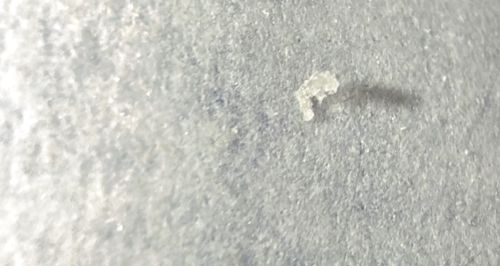
Springtail
Scientific Name: Collembola (subclass)
Order & Family: Order: Entomobryomorpha (likely), Family: Entomobryidae (common household type)
Size: Minute, usually less than 6 mm (1/4 inch), often 1-2 mm in length.
Natural Habitat
Typically found in damp environments such as soil, leaf litter, decaying wood, and sometimes indoors in bathrooms, basements, or potting soil.
Diet & Feeding
Primarily detritivores; they feed on decaying organic matter, bacteria, fungi, algae, and mold.
Behavior Patterns
Known for their unique jumping ability using a specialized appendage called a furcula (though not always visible or used by all species). They thrive in high humidity and are often seen in large aggregations.
Risks & Benefits
Benefits: play a crucial role in soil ecology by decomposing organic matter and cycling nutrients. Risks: Harmless to humans and pets; they do not bite, sting, or damage structural wood, though their presence indoors indicates moisture issues.
Identified on: 2/25/2026