
Community identification
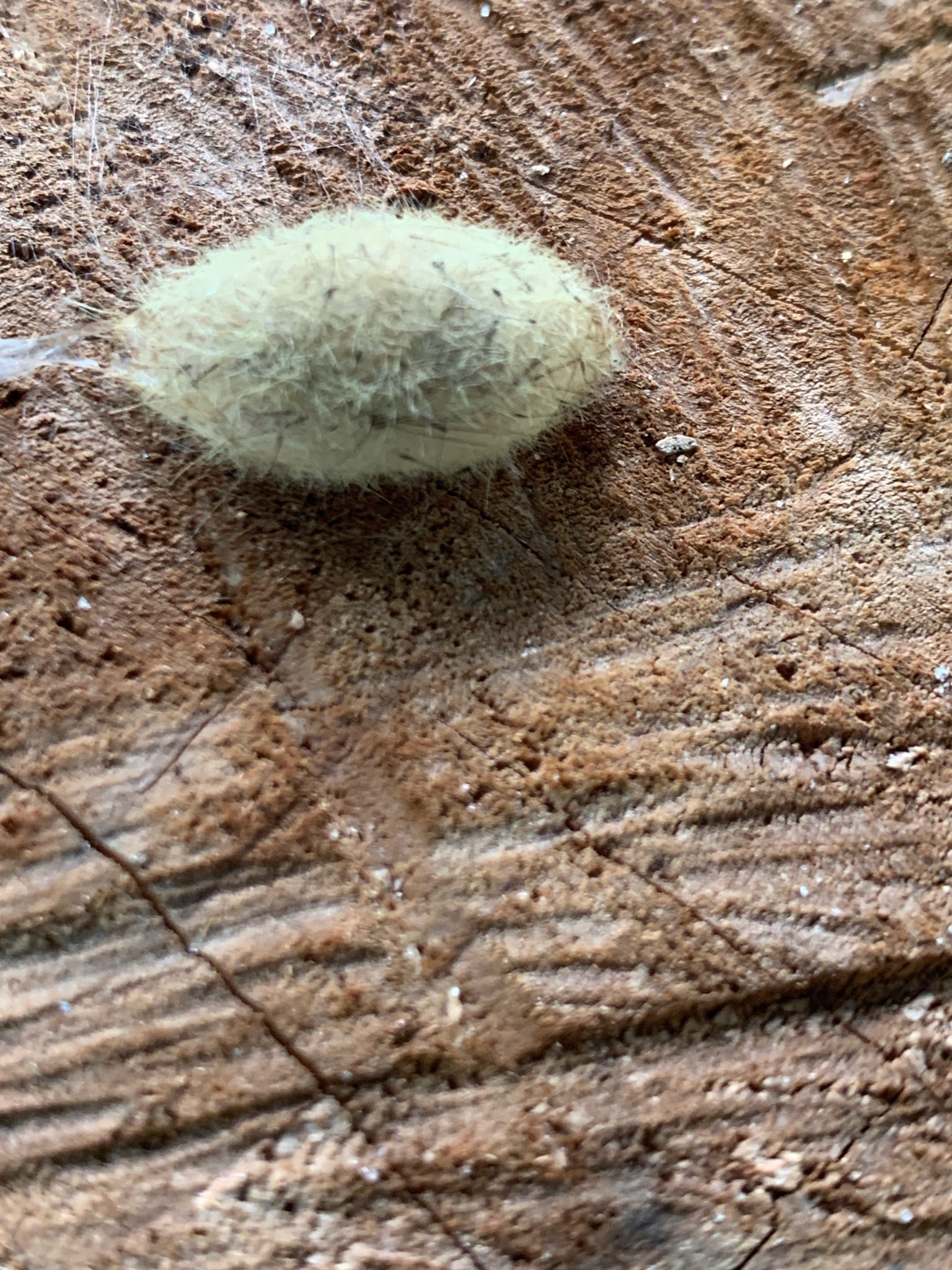
Tussock Moth Pupa/Cocoon
Family Lymantriidae
- Order & Family
- Order: Lepidoptera, Family: Erebidae (formerly Lymantriidae)
- Size
- 1.5 to 3 cm (0.6 to 1.2 inches)
Natural Habitat
Found on tree trunks, branches, fences, and the sides of buildings in hardwood forests and suburban areas.
Diet & Feeding
In the pupal stage, it does not eat. As larvae (caterpillars), they consume the leaves of various deciduous trees including oak, willow, and maple.
Behavior Patterns
The larva spins a protective silk cocoon often incorporating its own urticating hairs for defense. It remains in this dormant stage for several weeks before emerging as an adult moth.
Risks & Benefits
Risk: The hairs embedded in the cocoon can cause severe skin irritation, rashes, or allergic reactions in humans (urticaria) if handled. Benefit: They serve as a food source for birds and parasitic wasps within the ecosystem.