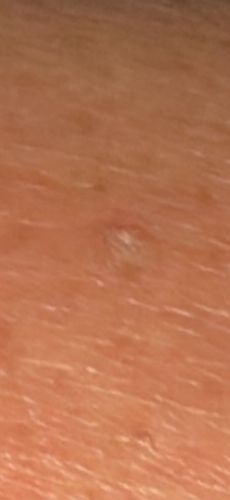
Scabies mite
Scientific Name: Sarcoptes scabiei
Order & Family: Order: Sarcoptiformes, Family: Sarcoptidae
Size: 0.3 to 0.45 mm (females), 0.2 to 0.25 mm (males)
Natural Habitat
Human skin, specifically within the stratum corneum (the outermost layer of the epidermis)
Diet & Feeding
Living skin cells and extracellular fluid found within the burrow
Behavior Patterns
The mite burrows into the skin, where females lay eggs; they are most active at night and spread primarily through prolonged skin-to-skin contact
Risks & Benefits
Risks include intense itching, rashes, and potential secondary bacterial infections like impetigo; there are no known ecosystem benefits
Identified on: 1/11/2026