Pinworm
Scientific Name: Enterobius vermicularis
Order & Family: Order: Oxyurida, Family: Oxyuridae
Size: Females are 8-13 mm long; males are smaller, 2-5 mm long.
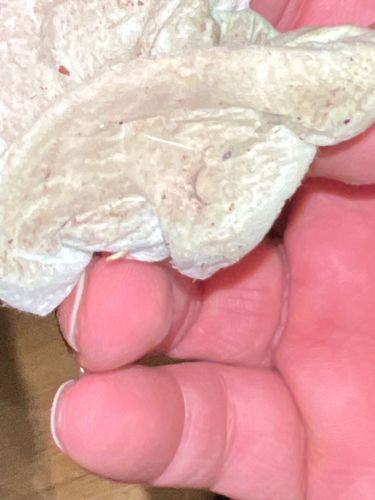
Natural Habitat
The human large intestine (cecum and colon) and perianal region.
Diet & Feeding
Intestinal contents and epithelial cells; they absorb nutrients from the human host.
Behavior Patterns
Nocturnal migration where gravid females move through the anus to deposit thousands of eggs on the perianal skin, causing intense itching.
Risks & Benefits
Risk: Causes Enterobiasis, characterized by perianal itching, irritability, and sleeplessness. Highly contagious through fecal-oral transmission or contaminated surfaces. Benefit: None to the host; strictly parasitic.
Identified on: 1/14/2026