
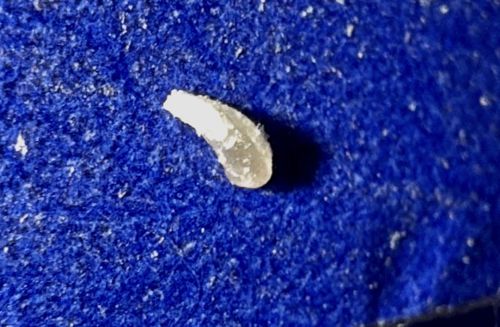
Tapeworm Segment (Proglottid)
Dipylidium caninum (most common dog/cat tapeworm)
- Order & Family
- Order: Cyclophyllidea, Family: Dipylidiidae
- Size
- Segments are typically rice-sized or cucumber seed-sized (approx. 3-5 mm long, up to 12 mm when moving), the full worm can be 15-70 cm long.
Natural Habitat
Intestinal tract of canids (dogs) and felids (cats); segments (proglottids) are often found on pet's bedding, fur near the anus, or in feces.
Diet & Feeding
The adult worm absorbs nutrients directly from the host's intestinal contents through its skin (tegument); it does not have a mouth or digestive tract.
Behavior Patterns
Adult worms live in the small intestine. They release egg-filled segments (proglottids) which exit the host via the anus. These segments are mobile when fresh and can be seen expanding and contracting. Once dried, they look like sesame seeds or white rice grains.
Risks & Benefits
Risks: Parasitic infection in pets causing scooting, itching, and weight loss. Potential zoonotic risk to humans (especially young children) if an infected flea is accidentally ingested. Benefits: None.