
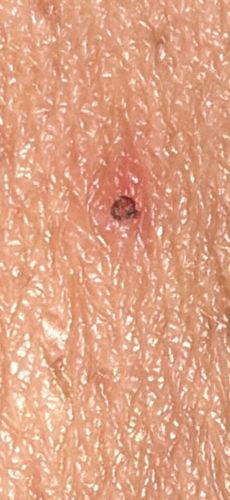
Tick (specifically a Larva or 'Seed Tick')
Ixodida (Order)
- Order & Family
- Order: Ixodida; Family: Ixodidae (Hard Ticks)
- Size
- Larvae ('seed ticks') are extremely small, approximately 0.5 – 1.0 mm (about the size of a poppy seed). Adults can grow much larger when engorged.
Natural Habitat
Tall grass, woodlands, brushy areas, leaf litter, and areas with high humidity where host animals (deer, mice, birds) are present.
Diet & Feeding
Hematophagous (feed exclusively on blood). Larvae typically feed on smaller hosts like mice or birds but will attach to humans. Nymphs and adults feed on larger mammals.
Behavior Patterns
They ambush hosts using a behavior called 'questing,' where they climb grass blades and hold out their front legs to latch onto a passing animal. Larvae are 6-legged (nymphs and adults are 8-legged). They embed their mouthparts into the host's skin to feed for several days.
Risks & Benefits
Risks: Ticks are significant vectors for disease. While larval ticks are less likely to carry Lyme disease (since they haven't fed on an infected host yet), they can still transmit spotty fevers or cause allergic reactions. Their bites can cause itching, irritation, and potential secondary infection. Benefits: They serve as a food source for some birds, reptiles, and amphibians, though generally considered a pest to humans.