
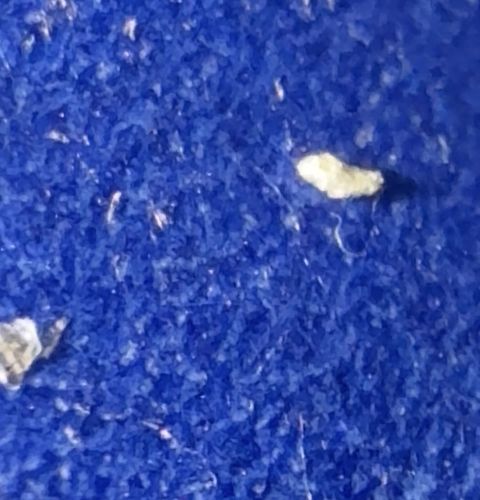
Community identification
Body Louse (Nit/Egg case)
Pediculus humanus humanus
- Order & Family
- Phthiraptera: Pediculidae
- Size
- Nits/Eggs: approx. 0.8 mm; Adults: 2-4 mm long
Natural Habitat
Typically found on human clothing, particularly along seams, rather than directly on the skin or hair (unlike head lice). They move to the skin only to feed.
Diet & Feeding
Hematophagous; they feed exclusively on human blood.
Behavior Patterns
Body lice lay their eggs (nits) in the seams of clothing or on bedding. They thrive in crowded, unsanitary conditions where clothing is rarely washed or changed. They are parasitic and require repeated blood meals.
Risks & Benefits
Risks: Causes intense itching (pruritus) and skin discoloration ('vagabond's disease'). More seriously, they are vectors for diseases like typhus, trench fever, and relapsing fever. Benefits: None known to humans or general ecosystem.