Tapeworm Segment (Proglottid)
Scientific Name: Dipylidium caninum (most common species found in pets)
Order & Family: Order: Cyclophyllidea, Family: Dipylidiidae
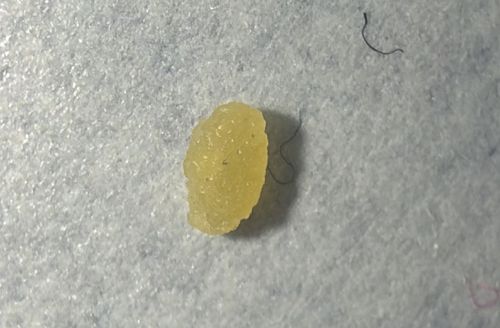
Size: Typically comparable to a grain of rice or a cucumber seed when dried; fresh segments are slightly larger and can expand/contract.
Natural Habitat
Intestinal tract of dogs and cats (and occasionally humans); eggs are shed into the environment via feces or by crawling out of the anus.
Diet & Feeding
Parasitic feeder; absorbs nutrients directly from the host's partially digested food in the intestines.
Behavior Patterns
Adult worms live in the intestine. Mobile segments (proglottids) detach and exit the host, often crawling on fur near the anus. Once dried (as seen in the image), they resemble yellowish sesame seeds and break open to release egg packets.
Risks & Benefits
Risks: Indicates a parasitic infection in pets, often transmitted by ingesting infected fleas. Can cause anal itching (scooting) and mild weight loss. Rarely infects humans (mostly young children). Benefits: None; it is a parasite.
Identified on: 2/21/2026