
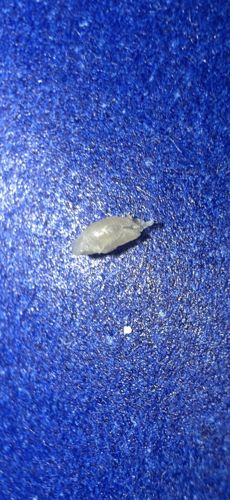
Household Casebearer (often specifically the Plaster Bagworm or a generic Clothes Moth larva case)
Phereoeca uterella or Tinea pellionella (depending on specific species)
- Order & Family
- Order: Lepidoptera, Family: Tineidae (Tineid Moths)
- Size
- Typically 8mm to 13mm (0.3 to 0.5 inches) long.
Natural Habitat
Found indoors in homes, particularly in high humidity areas like bathrooms, closets, underneath furniture, and in garages. They are common in tropical and subtropical climates.
Diet & Feeding
They feed on keratin-rich materials such as wool, hair, lint, spider webs, and dried insect remains. They generally do not eat cotton or synthetic fabrics unless soiled with food.
Behavior Patterns
The larva constructs a distinctive flattened, pumpkin-seed-shaped protective case out of silk and debris (sand, dust, lint). They drag this case around with them as they move along walls and floors. The moth stays inside this case until it pupates.
Risks & Benefits
Risks: They are considered household pests because they can damage woolen clothing, rugs, and furs. However, they are often less destructive than the Common Clothes Moth. Benefit: They act as minor scavengers, cleaning up old spider webs and dead insects.