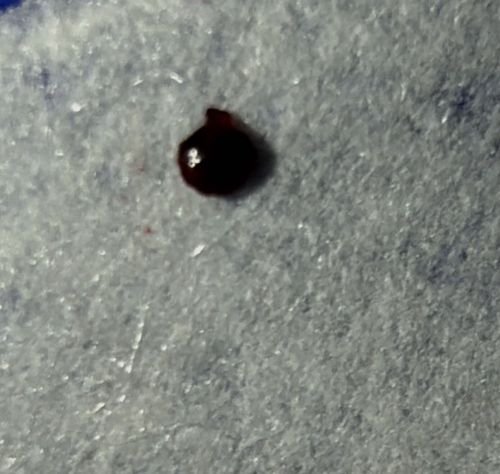
Engorged Tick (Nymph)
Scientific Name: Order: Ixodida (Likely Family: Ixodidae)
Order & Family: Order: Ixodida, Family: Ixodidae (Hard Ticks)
Size: Unfed nymphs are roughly poppy-seed sized (1-2mm); when fully engorged with blood (as pictured), they swell significantly to resemble a small bean or bead (3-5mm or larger).
Natural Habitat
Found in tall grass, wooded areas, leaf litter, and shrubs. They are parasitic and are often found on mammals (including humans and pets) following outdoor activity.
Diet & Feeding
Hematophagous (feeds exclusively on the blood of hosts such as mammals, birds, and reptiles).
Behavior Patterns
Ticks 'quest' by waiting on vegetation with legs outstretched to latch onto passing hosts. Once attached, they bury their mouthparts into the skin and feed for several days until fully engorged, after which they drop off to molt or lay eggs.
Risks & Benefits
Risks: Significant health concern. Ticks are vectors for serious diseases including Lyme disease, Rocky Mountain spotted fever, Anaplasmosis, and Ehrlichiosis. The bite site can also become infected. Benefits: minimal direct benefit to humans; they serve as a food source for some reptiles and birds.
Identified on: 2/11/2026