
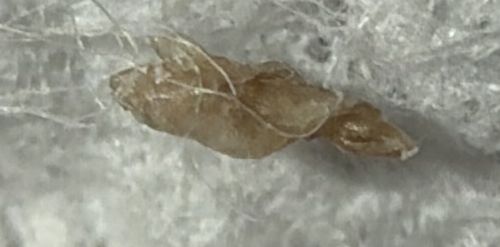
Webbing Clothes Moth Larva
Tineola bisselliella
- Order & Family
- Order: Lepidoptera, Family: Tineidae
- Size
- Larvae typically range from 6 to 12 millimeters (approx. 1/4 to 1/2 inch) in length depending on maturity.
Natural Habitat
Found indoors in dark, undisturbed areas such as closets, basements, drawers, and attics. They prefer environments where natural keratin fibers (wool, fur, silk) are stored.
Diet & Feeding
Strictly keratophagous, meaning they feed on natural fibers containing the protein keratin. This includes wool, silk, fur, feathers, leather, and lint. They will also eat accumulated pet hair or dust.
Behavior Patterns
The larvae spin silken tubes or tunnels (webbing) that they treat as a shelter, feeding from within them. They are photophobic (avoid light) and tend to graze across fabrics, often creating irregular holes or bare patches rather than eating the entire item.
Risks & Benefits
They pose no direct health risk to humans (they do not bite or spread disease). However, they are destructive household pests that cause significant damage to expensive clothing, rugs, tapestries, and taxidermy.